
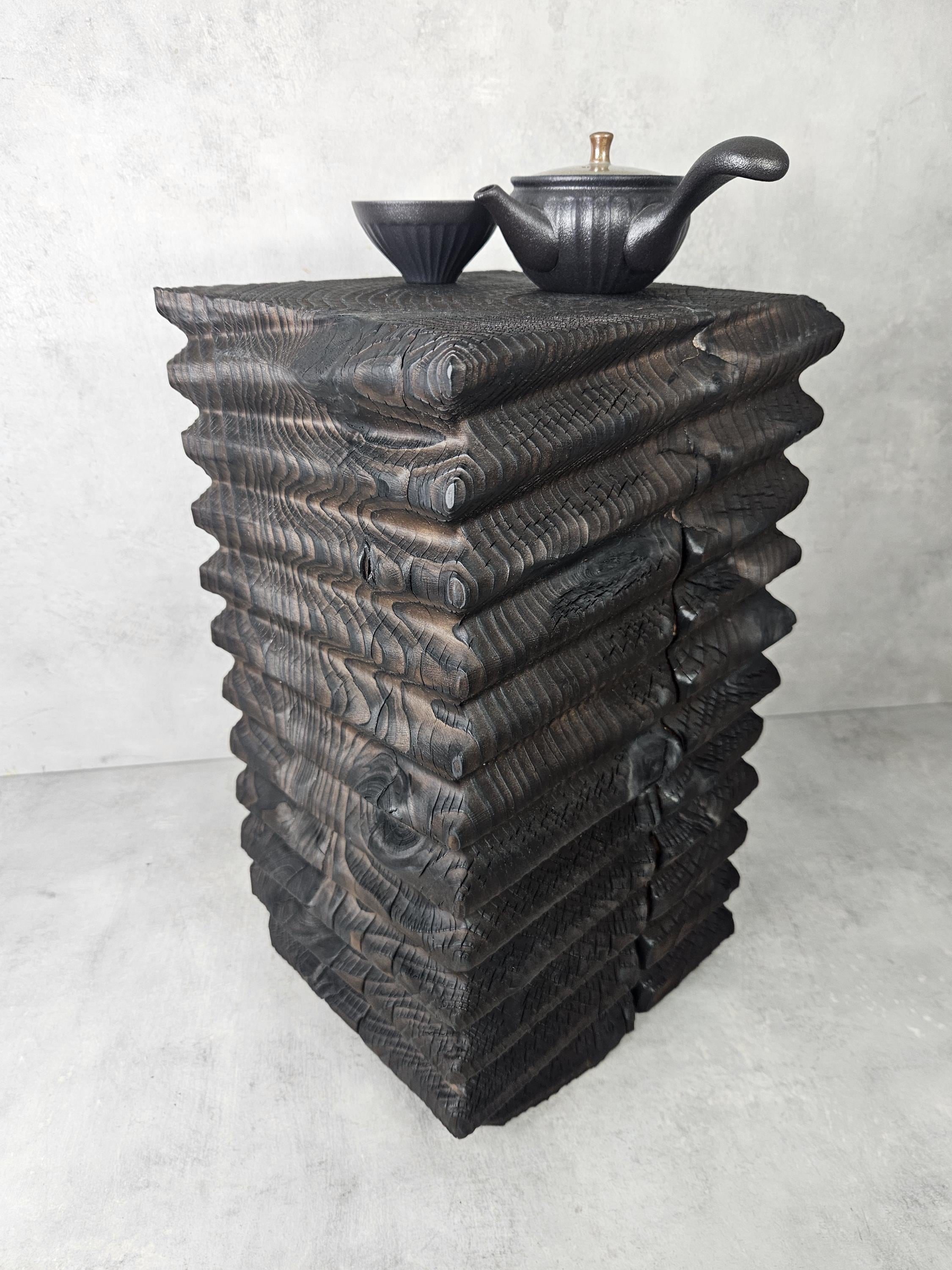
In a world that moves faster every day, many people feel the need to return to calm, to materials that breathe, and to the beauty born from the hands of a craftsman and the slow rhythm of nature. Hebi was created precisely for them — a stool-sculpture in Lebanese Cedar that rises gracefully like the spiralling movement of a serpent. “Hebi” means snake in Japanese, and the name is no coincidence. Its ascending curves seem to move, breathe, and lift themselves toward the light. The result is an object that blends art and function, designed for those who wish to bring into their home not just a piece of furniture, but a presence.
Lebanese Cedar: A Noble, Timeless Material
Hebi is carved from a single, solid block of Lebanese Cedar, a precious wood known for its natural fragrance, durability, and deep grain patterns. Every trunk writes its own story through years, seasons, wind, sun, and rain. Sculpting it means entering into a dialogue with a living material — respecting its movement and letting its character guide each curve. The final form doesn’t come from a strict project, but from a balance between intention and listening. Every curve follows the logic of nature, not the logic of industry.
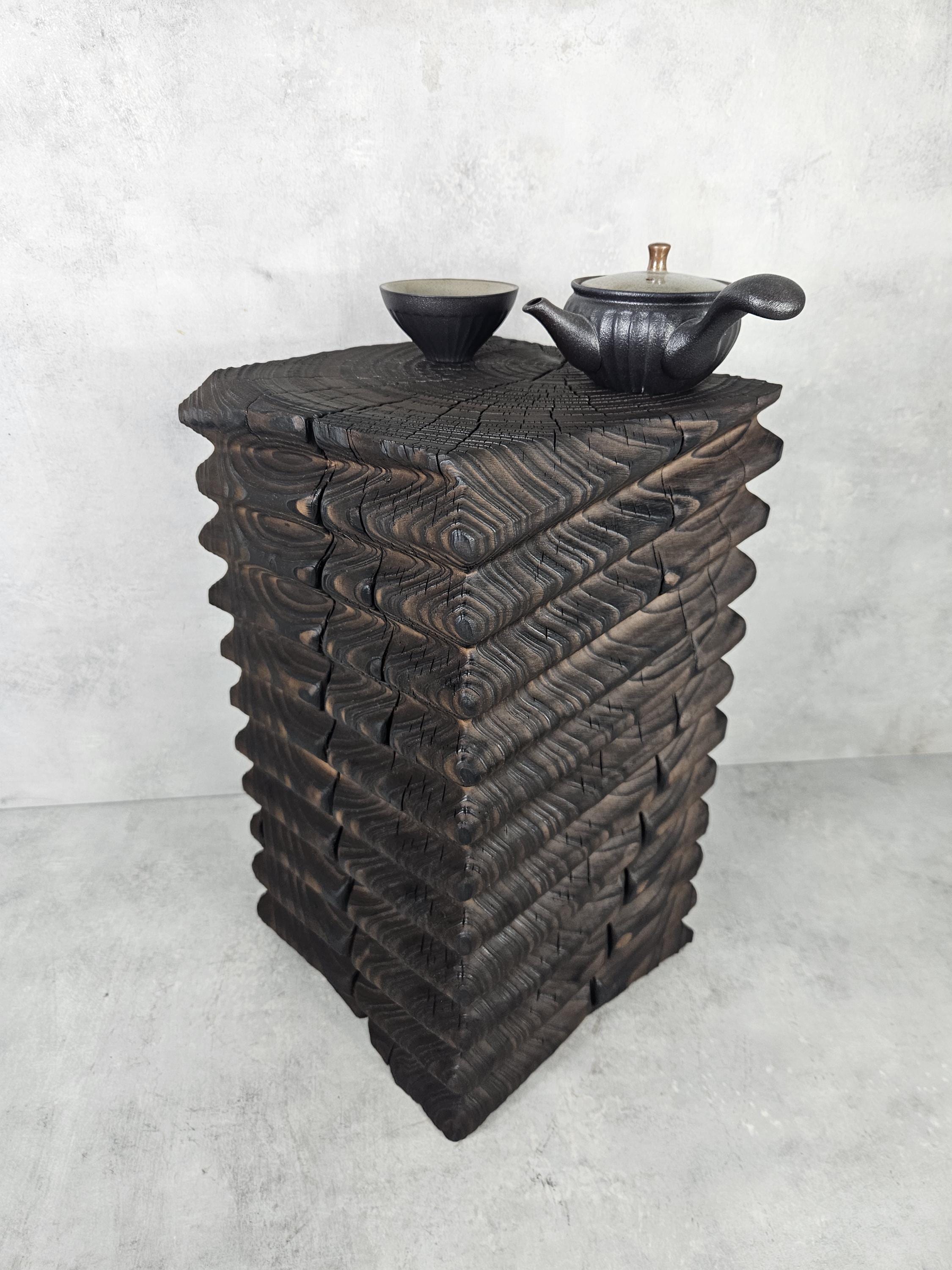
Yakisugi: When Fire Becomes a Finish
Hebi’s surface is treated with the traditional Japanese technique of Yakisugi, a controlled charring of the wood that highlights the grain, enhances its character, and increases durability. Fire reveals unexpected patterns, deep textures, and dark reflections that shift with the light throughout the day. This finish brings a unique, sculptural aesthetic — bold yet refined.
Wabi-Sabi: The Soul of Hebi
Hebi embodies the philosophy of Wabi-Sabi, where imperfection becomes beauty and natural materials are appreciated for their authenticity. There are no perfectly symmetrical lines, no identical pieces: each one is unrepeatable, like a work of art. Those who choose Hebi seek an object that brings calm, depth, and presence. An object that speaks without words, inviting contemplation and making the home feel more human and honest.
One Object, Many Meanings
Although it is a sculpture, Hebi can serve as:
- a stool with a solid, comfortable structure
- a meditation seat ideal for calm and zen spaces
- a decorative side table for minimalist interiors
- a sculptural element that transforms a quiet corner
- a design detail for Japanese or natural-style homes
It does not impose its function — it suggests it. The person who lives with it completes its meaning.
Who Hebi Is Made For
Hebi is created for those who appreciate:
- unique, handmade, non-industrial objects
- natural solid wood
- organic, unconventional shapes
- furniture that feels like a conversation, not a decoration
- a deep connection with nature
- calmness and harmony in everyday spaces
It blends beautifully into European contemporary homes — modern, minimalist, rustic, natural — and into interiors inspired by Japanese design and Wabi-Sabi aesthetics.
Hebi Is Not a Product: It Is an Experience
Each Hebi is unique, impossible to replicate. Its uniqueness is not an accessory — it is its essence. Whoever brings Hebi into their home brings a living sculpture, a fragment of nature that continues telling its story. Those who choose Hebi are not simply buying furniture: they are choosing an emotion, a gesture toward themselves, a moment of slow beauty in everyday life.